
Left Outer Join with Exclusion
SQL Server Left Outer Join with Exclusion: Explained When working with SQL Server, there are many scenarios where you need to combine data from multiple… Read More »Left Outer Join with Exclusion
Blog posts relating to SQL Performance Tuning.
SQL Server tuning is the process of optimizing the database’s configuration, queries, and infrastructure to ensure the system runs as efficiently as possible. The goal is to reduce resource usage, increase query speed, and improve overall system responsiveness. Performance tuning involves analyzing server performance metrics, identifying bottlenecks, and implementing solutions that range from hardware upgrades to query rewriting. These optimizations are crucial for maintaining a smooth user experience and supporting business-critical applications.
A key aspect of performance tuning is query optimization. Poorly written SQL queries, missing indexes, or incorrect indexing strategies often lead to slow query execution. By using tools such as execution plans and SQL Profiler, DBAs can identify and correct inefficiencies in SQL code. Techniques like index tuning, query rewriting, and partitioning can drastically reduce query execution times. Regularly updating statistics and reorganizing or rebuilding indexes further enhances query performance and ensures accurate query plans.
Beyond queries, performance tuning also focuses on the SQL Server environment itself. Configuring server settings, adjusting memory allocation, and fine-tuning I/O operations play a significant role in optimizing database performance. Monitoring tools like Database Health Monitor (available at DatabaseHealth.com) provide insights into server health and potential issues. Stedman Solutions offers comprehensive SQL Server performance tuning services, combining years of experience with specialized tools to ensure your SQL Server environment performs at its peak. Learn more about our managed services at Stedman Solutions.
SQL Server Left Outer Join with Exclusion: Explained When working with SQL Server, there are many scenarios where you need to combine data from multiple… Read More »Left Outer Join with Exclusion

Learn how to Export SQL to Excel. How to Export SQL to Excel Exporting data from SQL Server to Excel is a common task that… Read More »Export Data from SQL Server to Excel
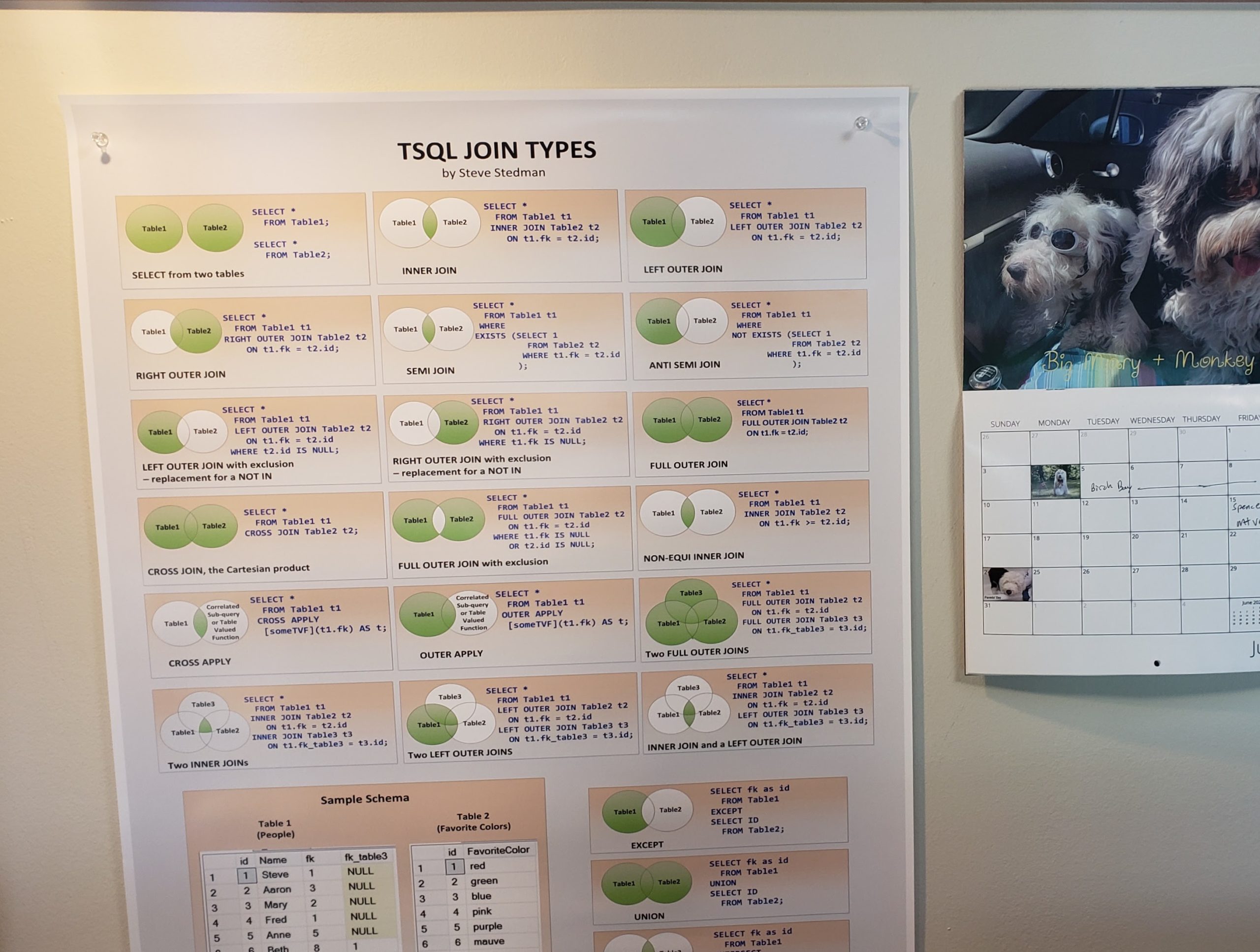
Download the Join Types poster today for FREE!Available for both SQL Server (TSQL) and MySQL. The poster includes detailed graphical representations of several join types:… Read More »Get your Join Types Poster

Understaing SQL Order of Joins Performance When it comes to optimizing SQL queries, one of the critical aspects to consider is the order of joins… Read More »SQL Order of Joins Performance
Understanding and Resolving SQL Server Error 18456: Login Failed for User SQL Server Error 18456 is a common login error that can cause headaches for… Read More »SQL Server Error 18456: Login Failed
Understanding the Top 10 Most Common Wait Types in SQL Server When managing SQL Server Performance, understanding wait types is crucial for diagnosing and troubleshooting… Read More »10 Most Common Wait Types

Today Microsoft released a new update for SQL Server. SQL Server 2019 CU30 for 2019 (15.0.4415.2 – December 2024) CU29 + GDR (15.0.4410.1 – November… Read More »New SQL Update from Microsoft

Why Duplicate Indexes Are Bad in SQL Server Indexes are one of the most powerful tools in SQL Server for improving query performance. However, like… Read More »Database Health Monitor: Duplicate Indexes

DBCC WRITEPAGE is an undocumented and unsuported DBCC command in Microsoft SQL Server that can be used to write a page of data from a… Read More »SQL Server DBCC Commands: DBCC WRITEPAGE

Understanding the Anti Left Join in SQL Server An anti left join, also known as a left join with exclusion, is a query pattern used… Read More »SQL School: ANTI LEFT JOIN